The Low Bun That Runs the Room: How America Fell for the Chignon
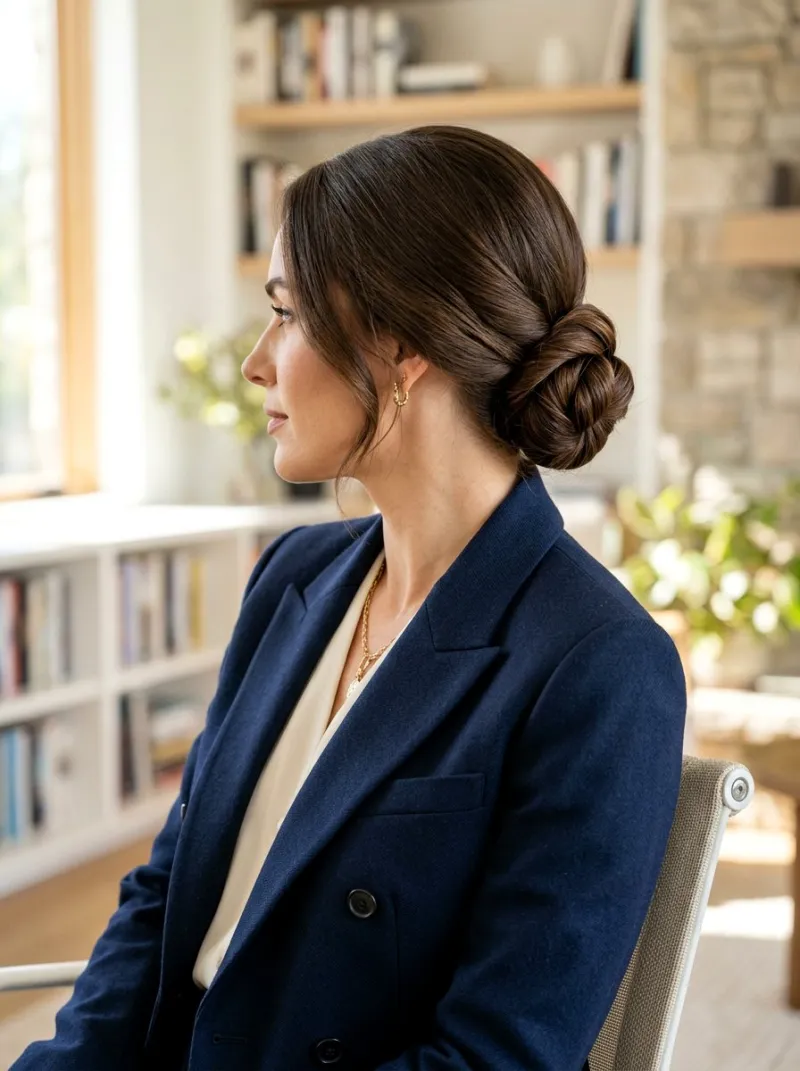
Photo: elegant woman low chignon bun professional executive portrait, via media.lovelyish.com
There's a moment everyone recognizes: a woman walks into a room, hair swept up and pinned low at the nape, and somehow the whole energy shifts. No blowout, no cascade of curls — just a knot. And yet, in America, that knot might be the most loaded hairstyle we have.
The chignon (say it with us: sheen-YON) has been quietly accumulating power for over a century. It's the hairstyle of first ladies and Fortune 500 executives, of ballet dancers and Supreme Court nominees. How did a simple low bun become the unofficial uniform of women who run things?
It Started With Society Pages
In the late 1800s, the chignon was the height of Gilded Age glamour. American heiresses — the ones whose weddings made the front page of The New York Times — wore their hair gathered low and loose, often adorned with combs or ribbons. It was feminine, yes, but it was also practical: a style built to survive an entire evening of dinner parties and dancing without a single strand out of place.
That duality — soft on the surface, steel underneath — turned out to be the chignon's superpower.
Grace Kelly Made It Aspirational
Fast forward to the 1950s, when Philadelphia's own Grace Kelly carried the chignon from Main Line society to Hollywood and then to Monaco. Her low, polished knot became shorthand for a certain kind of American elegance: composed, unhurried, impossible to ruffle.
Then came the pop culture echo chamber. Audrey Hepburn in Breakfast at Tiffany's gave us the beehive-adjacent updo, but it was the sleek low bun that kept showing up on women in power — news anchors, attorneys, the first woman in a corner office. By the 1980s, the "power bun" was practically a workplace requirement, sitting high and tight like a corporate helmet.
From the C-Suite to the Campaign Trail
The modern chignon has loosened up — literally. Today's version is softer, often with face-framing pieces left out, worn by women who want polish without looking like they tried too hard.
Think of Kamala Harris, whose low, slightly undone chignon became a signature throughout her Senate career and vice presidency. Or the endless parade of chignons at State of the Union addresses, IPO roadshows, and Met Gala after-parties. The message is consistent: I'm here to work, and I don't have time to fuss with my hair.
We Asked the Stylists
"A chignon signals that you've made a decision," says Marisol Vega, a stylist whose clients include D.C. attorneys and network executives. "It's controlled. It says, 'I thought about this, and I chose it.' That's what authority looks like."
New York stylist Deion Carter puts it more bluntly: "Anyone can do a messy bun. A chignon takes intention. And intention is what people read as competence."
There's also pure physics at play. Hair off the face opens up your features in meetings and on camera. A low placement keeps the silhouette sleek under blazers and collars. And unlike a high bun, which can read severe or overly formal, the chignon sits at that sweet spot between approachable and commanding.
Why It's Not Going Anywhere
Every few years, some trend forecaster declares the updo dead, and every year the chignon outlives the obituary. Maybe that's because it was never really a trend — it's a tool. As long as American women are walking into boardrooms, courtrooms, and ballrooms with somewhere to be, the low bun will be there, pinned and ready.
As Vega puts it: "Hairstyles come and go. Authority never goes out of style."
Ready to master the look? Check out our step-by-step chignon tutorial, plus the four pins every woman should own.