Do the Math: Your Face Shape Already Knows Where Your Bun Belongs
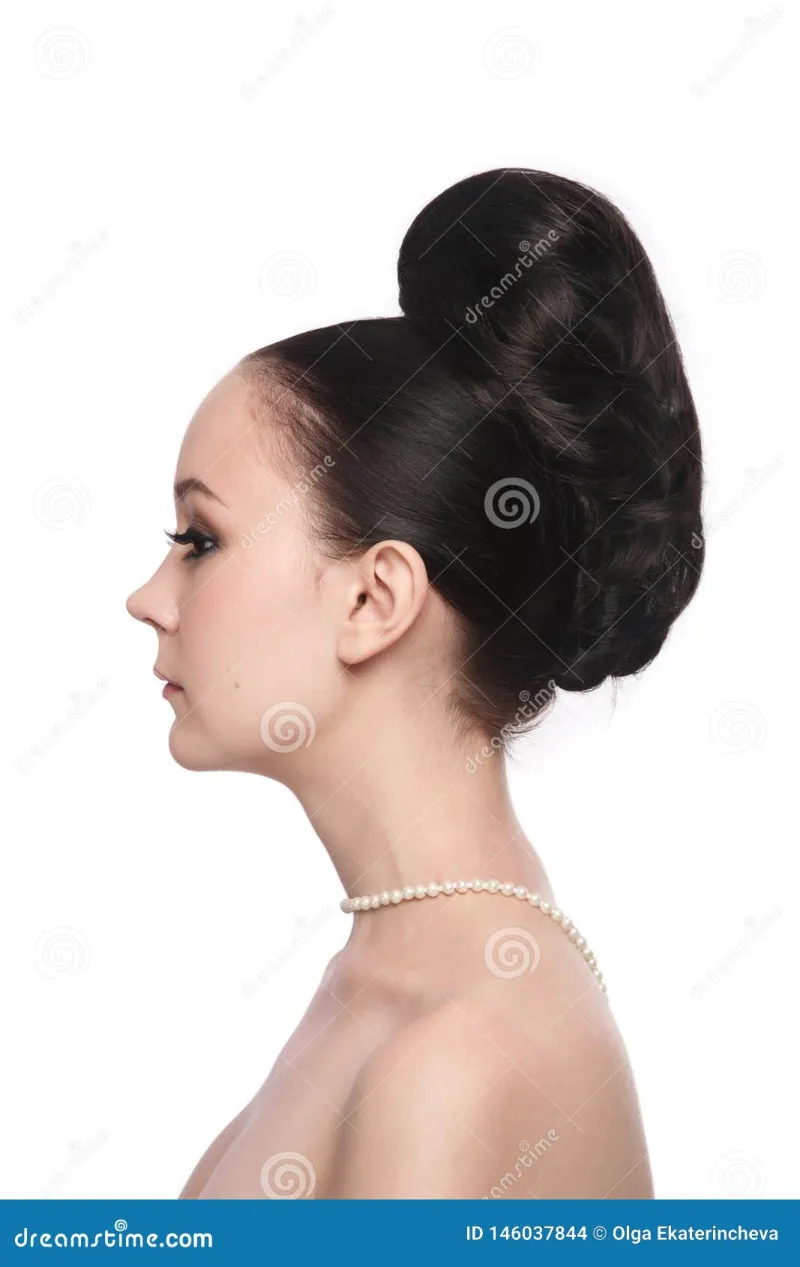
Photo: elegant woman updo bun face profile studio portrait hair styling, via thumbs.dreamstime.com
Here's an opinion we'll defend at the salon and at the dinner table: most women are wearing their buns at the wrong height. Not because they lack taste, but because nobody ever told them the chignon is a geometry problem before it's a style problem.
Scroll through bridal Pinterest for five minutes and you'll see the same soft, mid-height bun repeated a thousand times — lovely on the model, and frequently wrong for the woman pinning it to her board. Height changes everything. It elongates, it shortens, it widens, it slims. The bun is the most architectural style in hair, and architecture is all about proportion.
The Diagnostic: Sixty Seconds to Your Signature Updo
Pull your hair back, face the mirror in honest daylight, and answer honestly:
- Is your face longer than it is wide? (If you can fit roughly two finger-widths of forehead and your chin feels narrow, yes.)
- Is your face roughly as wide as it is long, with a soft jawline? (Hello, round and square faces.)
- Is your forehead the widest part of your face, with a tapering chin? (Heart-shaped, we see you.)
- Are your features balanced and your cheekbones your best angle? (Oval — the stylist favorite.)
Your answers point directly to your height. Now for the breakdown.
Nape-Level: The Lengthener
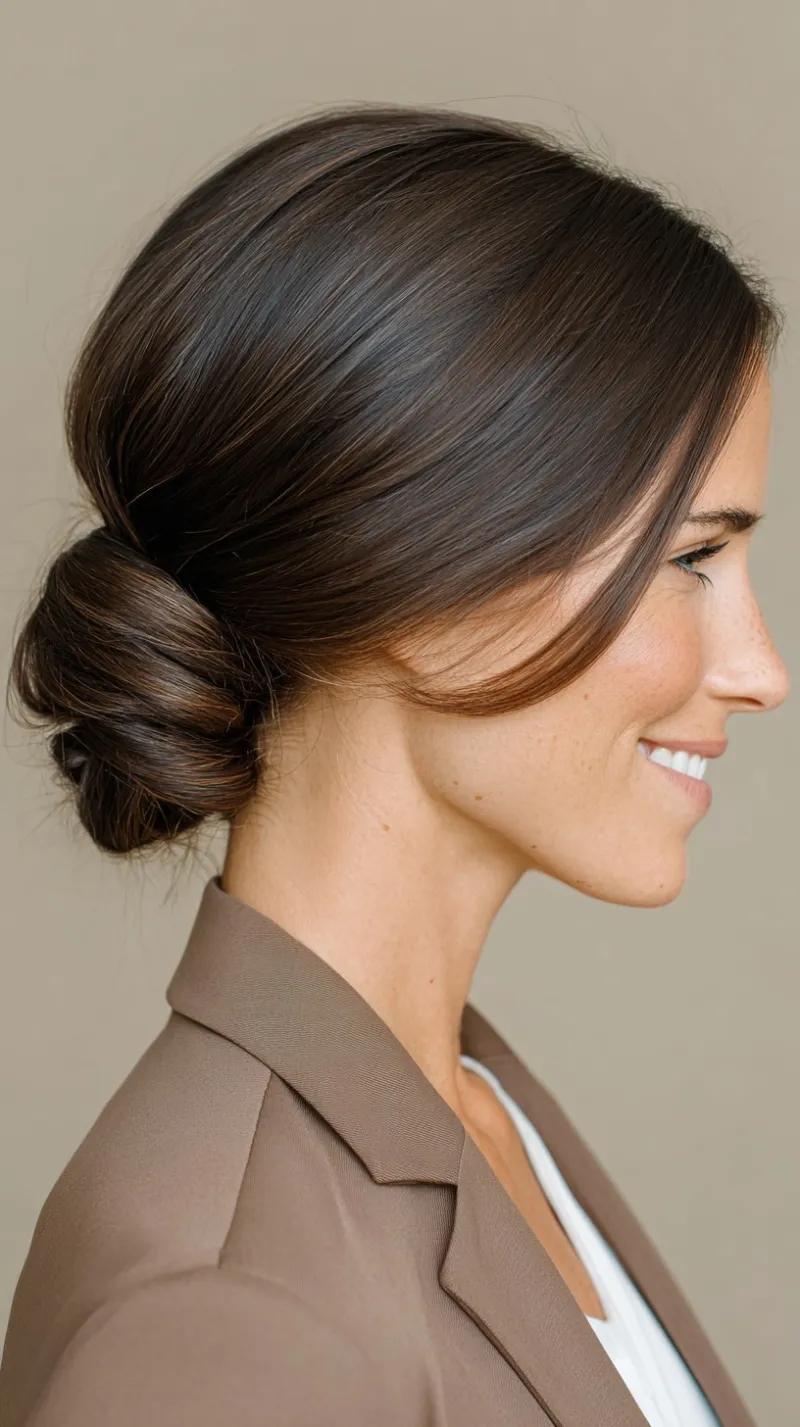
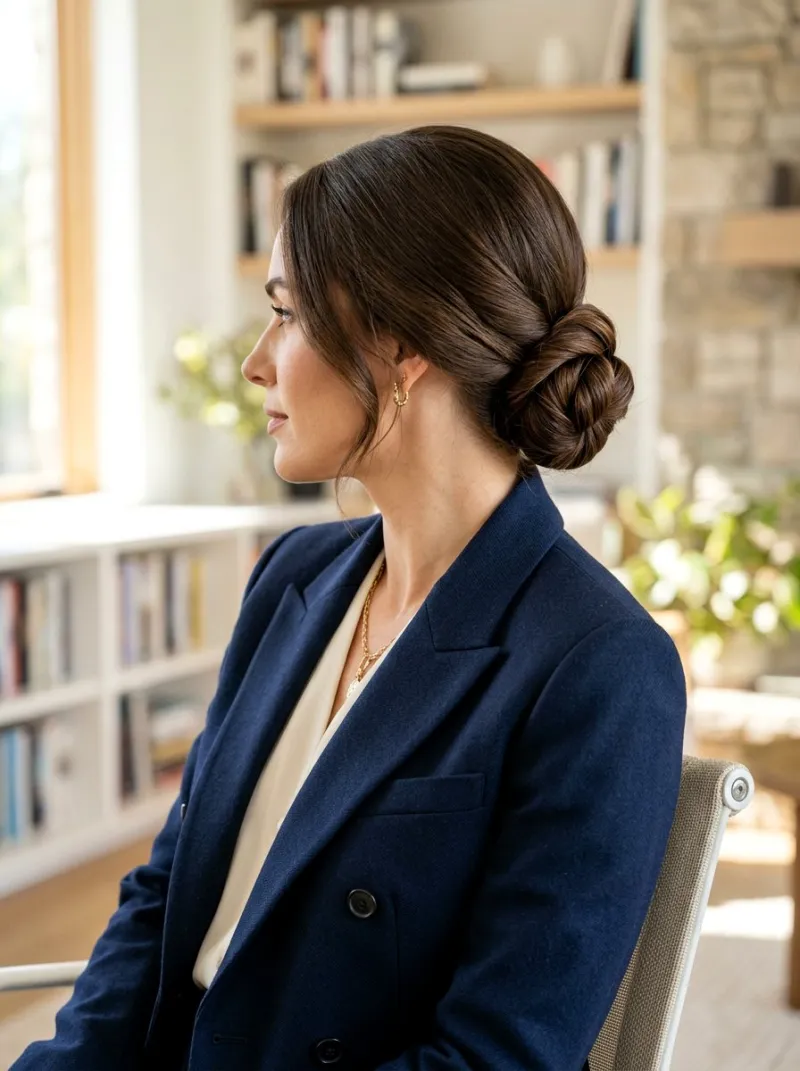
A chignon sitting at the base of the skull — low enough to graze the collar of a strapless gown — is the most flattering height for round and square faces. Why? It keeps volume and visual weight low and close to the neck, which means the widest part of your face isn't competing with width at your crown. Celebrity stylists consistently steer clients with stronger jawlines toward the nape bun for exactly this reason: it reads as sleek, elongated, and quietly expensive.
For brides, this is also the most romantic height. Think of the low, loosely pinned chignons on 1990s supermodels walking couture runways — still the reference point for modern wedding hair from Charleston to Napa.
Mid-Crown: The Great Compromise
The bun at the back of the head, halfway between nape and crown, is the most common — and the most misused. It genuinely flatters oval and heart-shaped faces, where balanced proportions can handle a centered silhouette. On longer faces, though, a mid-height bun adds vertical emphasis you don't need.
The fix for longer faces isn't avoiding the mid-chignon — it's widening it. Ask your stylist for a slightly wider, softer bun with face-framing pieces left out at the temples. The horizontal softness counteracts the vertical pull. It's the same principle behind curtain bangs on long faces: add width where length dominates.
High Chignon: The Statement
Perched at or above the crown, the high bun is bold, youthful, and unforgiving. It lifts everything — cheekbones included — which is why it flatters oval and heart-shaped faces spectacularly and why it can overwhelm softer, rounder features. It also demands confidence; a high chignon announces itself from across the room in a way a nape bun never will.
Stylists who work red carpets will tell you the high bun is having a moment precisely because it photographs beautifully from the front — critical for weddings in the Instagram era. If your photographer matters (and at your own wedding, they should), a crown-high chignon with a clean part delivers a profile and a front-facing silhouette in one style.
The Rule Worth Breaking
Every geometry lesson has an exception, and here's ours: bone structure trumps face shape. If you have a gorgeous neck, show it off with a low bun regardless of category. If your crown is your best feature, wear it high. The face-shape framework is a starting point, not a cage — the women who look most put-together are the ones who know the rules well enough to bend one on purpose.
But start with the math. Find your height, master that chignon until it's muscle memory, and then decide whether the trend cycle deserves a vote. It usually doesn't.