Braids Behind the Butter Cow: A Week Inside the Fairground Updo Economy
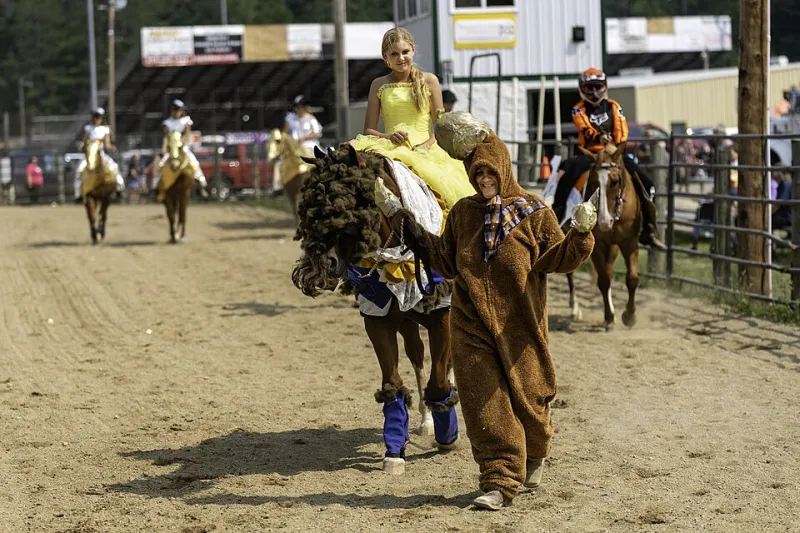
Photo: Lorie Shaull, CC BY 2.0, via Wikimedia Commons
There's a moment at the Iowa State Fair — usually around 10:40 in the morning, before the heat gets serious — when the line at the beauty booth starts to bend. It curves past the corn dog stand, doubles back toward the 4-H barns, and settles into a patient, sweating ribbon of women and girls waiting their turn for the same thing: fifteen dollars, one updo, no appointment necessary.
Nobody at a Manhattan salon is doing that math. But at fairgrounds across the Midwest and the South, this is simply how August works.
The Fifteen-Dollar Chair
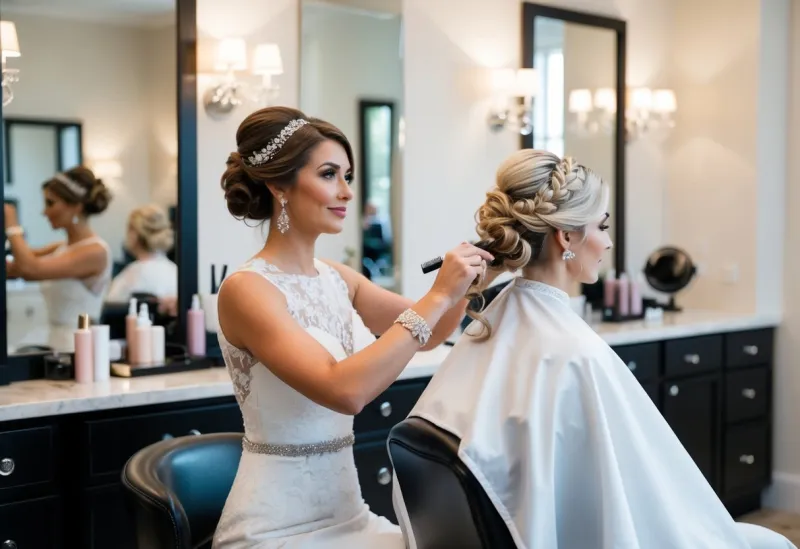
The economics of a fair booth would make most stylists wince. At $15 a head, a braider working a steady clip — call it one client every twelve to fifteen minutes — grosses somewhere between $60 and $75 an hour, minus booth rent that can run a few hundred dollars for the full run of the fair. That's real money in counties where the median salon appointment costs less than a tank of gas.
But the volume is the story. Veteran booth braiders talk about their fair-week totals the way fishermen talk about the one that got away. Three hundred heads. Four hundred. One woman in Kansas, who's worked the same fair for nineteen years, keeps a tally in a spiral notebook — 4,212 updos and counting.
At that pace, technique has to be improvised and ruthless. There's no time for a proper blowout. Fairground stylists work on hair that's already been slept in, sweated through, and hairsprayed into submission. They reach for what's on the table: a can of dry shampoo doubling as texture and grip, a travel-size bottle of leave-in conditioner for flyaways, bobby pins bought in bulk from the wholesale club, and — yes, more than one booth confirmed — duct tape for the folding chairs, though several swore they've seen it pressed into emergency hair duty on humid days when the pins simply gave up.
Repeat Customers and Fair-Week Rituals
Here's what surprised us most: the loyalty. These aren't one-off tourists. Women drive in from three counties to have the same braider do their hair before the grandstand concert, the same way they always buy their funnel cake from the same vendor. Some booths keep client notes — a granddaughter's favorite braid pattern, the widow who always wants her low bun a little tighter than seems reasonable.
"I've done four generations of some families," a braider at the Indiana State Fair told us, not looking up from a rope braid in progress. "Grandma brought her daughter, the daughter brought hers, and now the little one sits on a stack of towels so she can reach the mirror."
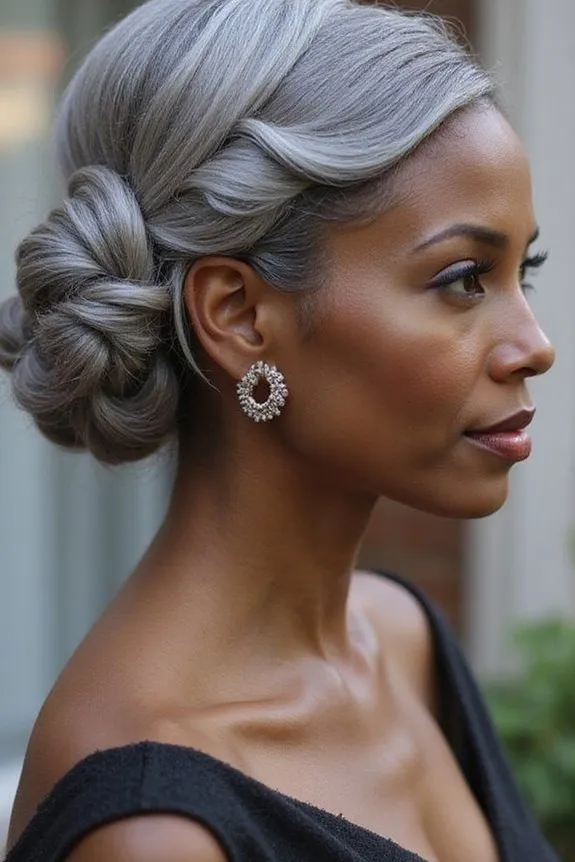
The styles themselves tell a story, too. Fair updos skew practical and proud: two French braids pinned into a crown for the livestock shows, where a hat has to come off and go back on without disaster. A slicked low bun for the queen pageant contestants. Bubble braids for the kids, who make up half the business at some booths. Almost nobody asks for anything trendy. The fairground canon is its own thing, passed from booth to booth like a recipe.
Working the Heat, the Wind, and the Livestock
Any salon stylist will tell you their enemy list starts with humidity. A fairground stylist's list is longer. There's the wind off the open midway. There's the cowboy hat that goes on at 2 p.m. over a style built at 11. There's the client who got her hair done before the demolition derby, which is its own stress test.
The pros adapt. Braids beat buns in gusty weather — more anchor points, less sail area. A misting bottle of water and gel mixed strong keeps edges flat when the dew point climbs. And the finishing spray is applied with a generosity that would horrify a bridal editorial, because the goal isn't a photograph. The goal is surviving until the truck lights are on and the pigs are loaded.
"Bridal hair has to last eight hours and look perfect in pictures," one Oklahoma booth veteran said. "Fair hair has to last fourteen hours and look decent after a kid grabs it. Different sport entirely."
The Booth as Institution
It would be easy to file the fair beauty booth under quaint — a relic of the same Americana as pie contests and prize pumpkins. But spend a week watching one operate and you see something closer to what salons used to be, and what a lot of them are trying to get back to: cheap, fast, communal, and woven into the calendar of a whole community.
The chignon didn't climb to its place in American style on bridal-suite budgets alone. It got there on fifteen-dollar chairs at county fairs, too — set with dry shampoo, pinned by someone who's done four hundred heads this month, and holding firm through the heat, the wind, and the last ride of the night.
The fair packs up. The notebook gets a new total. And somewhere in a barn in Iowa or a pavilion in Kansas, a woman is already planning next year's appointment.