Checked the Radar Before You Booked? Inside America's Weather-Driven Updo Economy
Somewhere in Tampa right now, a stylist is refreshing a radar app before confirming a Saturday wedding. In Phoenix, another is eyeballing the humidity percentage and reaching for a braiding comb instead of a curling iron. Neither of them thinks this is strange. If you've ever had your hair done anywhere with actual weather, you know the drill.
The truth nobody puts on the booking site: most experienced updo stylists aren't just planning your hair. They're planning around the sky.
The Forecast Is the First Consultation
Ask stylists how they prep for a big appointment and the answers sound less like beauty talk and more like a pilot's pre-flight checklist.
"I look at the ten-day like it's my Bible," says one Florida bridal stylist who asked to be identified only by her county, because — in her words — "every county has its own hair problems." If dew points spike above the mid-70s, she adjusts everything: stronger-hold products, tighter pin patterns, and a frank conversation with the bride about what "soft and romantic" can realistically survive outdoors in July.
In the dry Southwest, the enemy flips. Scottsdale stylist Marisol Vega says her desert clients deal with static, brittleness, and styles that "fall flat by lunch because there's no moisture in the air to give them any life." Her solution is structural: crown braids, rope twists, and set patterns that hold their shape precisely because the air won't budge them.
Same appointment. Same pins. Completely different physics.
A Regional Field Guide to Weather Hair
Spend enough time in salon chairs around the country and you start to notice the rituals. Every region has developed its own quiet protocol.
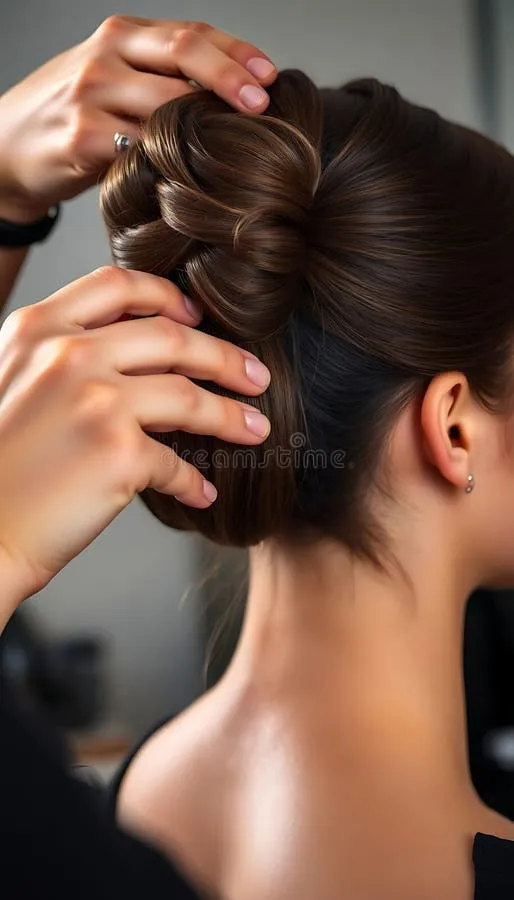
The Gulf Coast and Southeast: Hurricane-Hair Rules. When the forecast says 85% humidity, the low, loose, face-framing bun is off the table. Stylists here work with the moisture instead of against it — slicked bases, gel-brushed edges, and pins placed "like scaffolding," as one New Orleans stylist put it. The goal isn't to fight frizz. It's to build a bun where frizz has nowhere to live.
The Desert Southwest: The Dry-Heat Braid Belt. Arizona and Nevada stylists lean on woven styles — crown braids, milkmaid halves, braided chignons — because braids distribute tension and don't depend on curl memory. In air that could double as a dehumidifier, a braid is architecture, not styling.
The Midwest: The Wind Advisory Chignon. Chicago and the plains states deal with a problem Southerners don't: wind that can take a polished style from boardroom to bird's nest in one block. The regional answer is weight. Lower placements, denser pin work, and a healthy respect for any outdoor photo location without a windbreak.
The Northeast: The Four-Season Split. New York stylists describe their year in weather modes — winter static, spring rain, summer subway-platform humidity, fall's brief golden window when anything holds. Locals book outdoor events in October with the confidence of people who know the atmosphere is finally on their side.
Reading the Sky Like a Product Label
What's actually happening up there? It comes down to moisture — in the air and in your hair.
Humidity is water vapor looking for a home, and porous hair strands are enthusiastic hosts. When the dew point climbs, the outer layer of each strand swells, roughs up, and reverts whatever smooth style you paid for back toward its natural texture. That's why a Miami blowout and a Minneapolis blowout are two different contracts.
Dry climates do the opposite. With almost no moisture in the air, hair sheds its static charge slowly, strands repel each other, and soft, airy styles collapse rather than expand. This is why your Phoenix friend swears by braids and your Houston friend swears by anti-humidity spray — they're both right, for opposite reasons.
Even temperature swings matter. A style set indoors at 68 degrees then marched into a 95-degree July wedding will loosen as the hair shaft expands. Smart stylists build in what some call "settle room" — pinning slightly tighter than the mirror suggests, knowing the day will do the relaxing for them.
The New Consultation Question
Here's the shift stylists say they've noticed in the last few years: clients are asking. "Is it going to rain that day?" has become as common as "Can you match my inspiration photo?"
Part of it is the wedding-industrial complex — outdoor ceremonies, tented receptions, and golden-hour photos have made weather literacy a bridal requirement. Part of it is that we all carry a hyperlocal hourly forecast in our pockets now, so we know when the thunderstorm is coming. Ignorance was easier.
The best stylists have leaned in. Some send weather check-ins a week before big events. Some keep two pin kits — one for humid days, one for dry. A few admit to rescheduling outdoor trial runs when the forecast looks wrong, on the theory that practicing in the wrong air is practicing for nothing.
Book the Bun, Then Book the Sky
If you're planning an updo for a big day, steal the pros' playbook. Check the dew point, not just the temperature — anything over 65 means humidity is a player. Ask your stylist directly how they adjust for the forecast; if they light up and start talking pin density, you've found a good one. And if the weather turns? Remember that stylists have been quietly outsmarting the atmosphere for decades. The bun will hold.
The weatherman, it turns out, has been part of the beauty industry all along. He just doesn't get tipped.