Pliés and Pins: Why America Can't Quit the Ballerina Bun
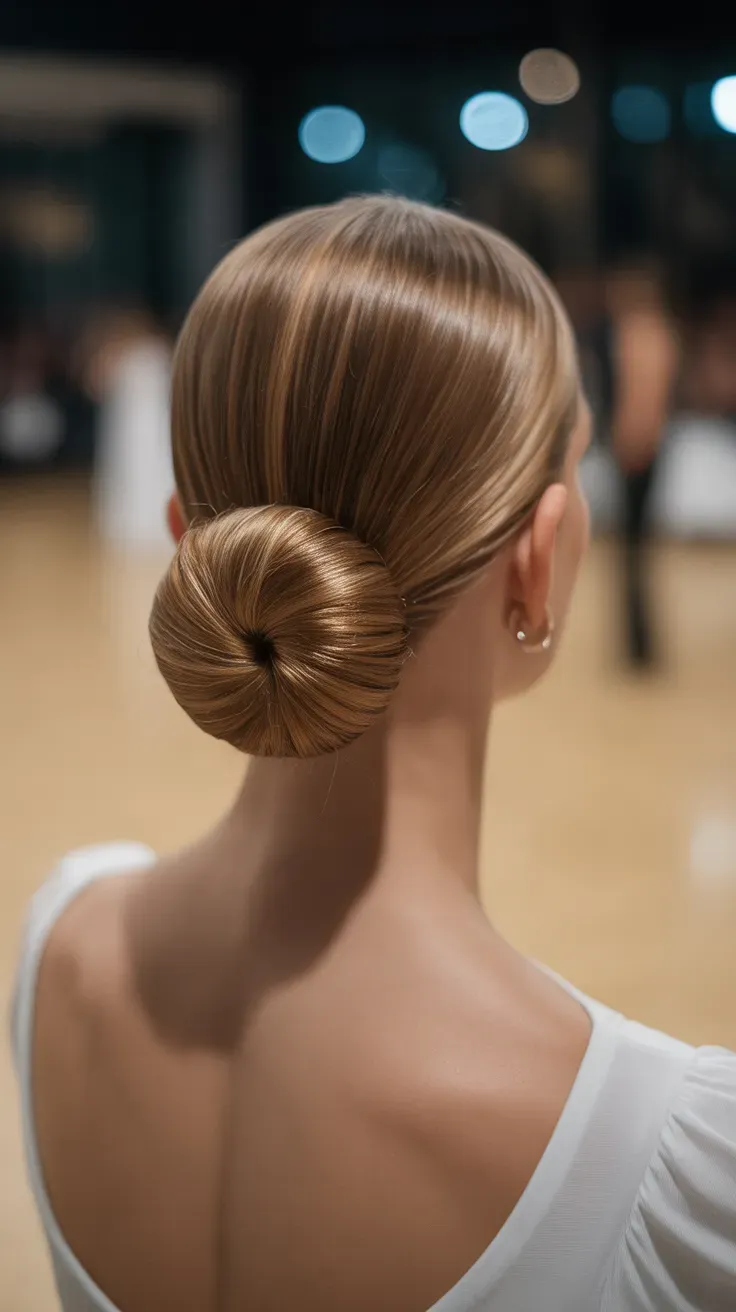
Photo: ballerina slicked bun hairstyle dance studio barre class elegant, via hervibeedit.com
Every few years, American women collectively decide, again, that the ballet bun is the answer. It happened in the 2010s when balletcore swept runways and Pinterest boards. It happened in the 1980s when aerobics culture put hair in scrunchies and legwarmers. It happened in the 1950s, and the 1920s, and — if you trace the thread all the way back — it started in the dance studios of the early twentieth century. The bun doesn't trend. It recurs, like a season.
Understanding why says a lot about American style itself.
From the Studio to the Street
The ballerina bun entered mainstream American consciousness through a strange side door: children's dance classes. For generations, millions of little girls were sent to Saturday ballet with instructions to arrive with hair "in a bun" — a rule so universal it became a cultural default. Those girls grew up, and the muscle memory came with them.
But the bun didn't stay in childhood. Ballet's visual language — leotards, wrap sweaters, flats, that immaculate pulled-back hair — migrated into fashion through the back-to-back arrivals of athleisure and the "clean girl" aesthetic. By the time TikTok anointed the slicked bun a signature look, the style had already been rehearsing for a century.
The choreography of the trend is easy to follow. Yoga studios normalized wearing workout clothes all day. Dance-inspired fitness classes like barre and Pilates put thousands of American women in studios where a bun was simply the practical choice. Then social media did what it does: it turned the practical into the aspirational. A bun worn because it stayed out of your face during a plié became a bun worn because it photographs beautifully and signals discipline, polish, and a certain self-contained elegance.
A Brief Loop Through Hair History
The ballet bun's American story has distinct acts. In the early 1900s, as Russian ballet toured the US, dancers like Anna Pavlova became national obsessions, and their hairstyle — the disciplined, center-parted coil — became shorthand for refinement. Midcentury Hollywood kept a version alive in the chignons of stars like Audrey Hepburn, whose low, architectural updo in Funny Face (1957) remains a reference point for stylists today.
The 1980s brought the scrunchie-and-side-ponytail era, but ballet's grip persisted in aerobics studios and the popularity of dance films. The 2010s delivered balletcore proper: tulle skirts at brunch, ribbon-trimmed flats, and buns worn with deliberate softness — a few face-framing strands pulled loose, the ballerina-off-duty look. And in the 2020s, the slicked center-part bun became arguably the single most photographed hairstyle in America, thanks to a generation raised on dance studios and equipped with ring lights.
What the Ballet Bun Means for the Chignon
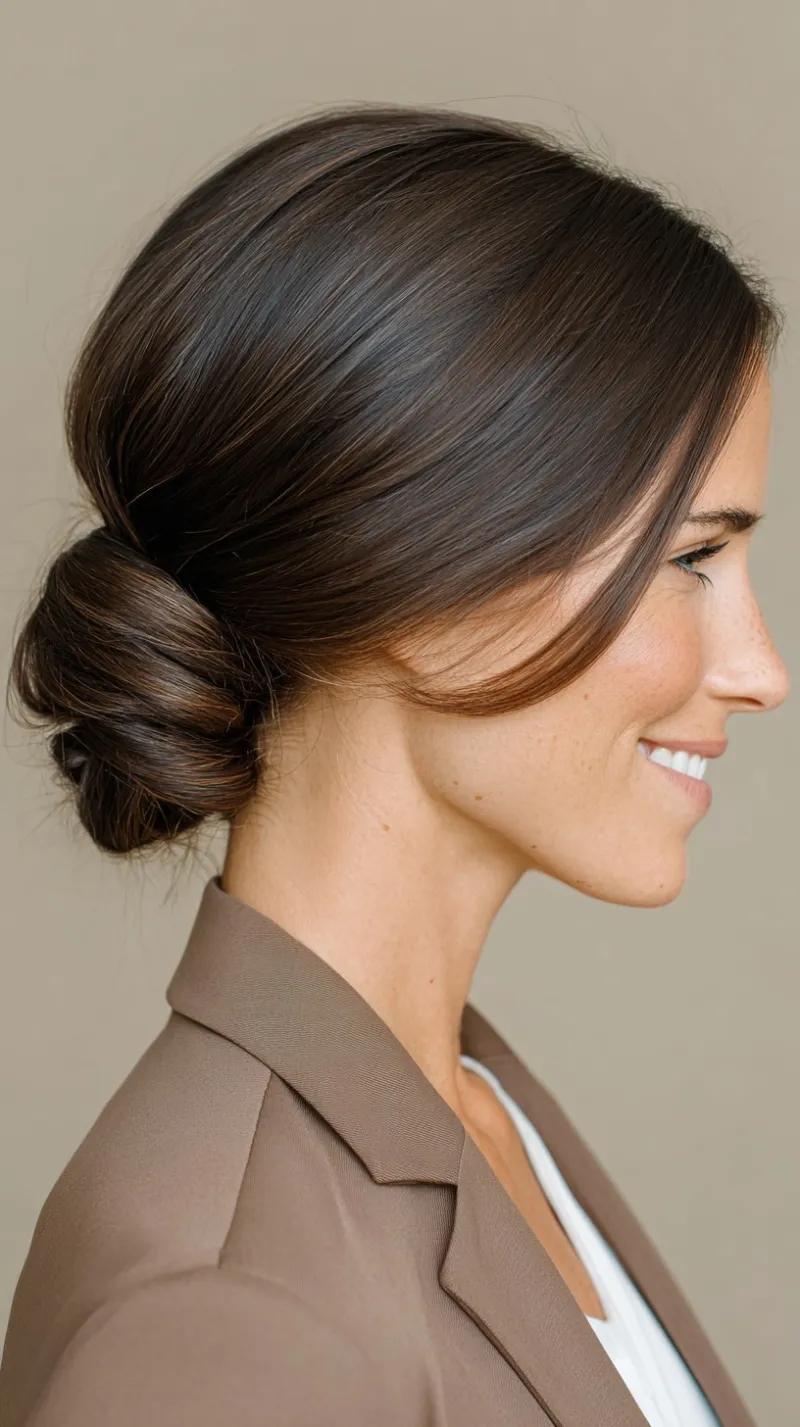
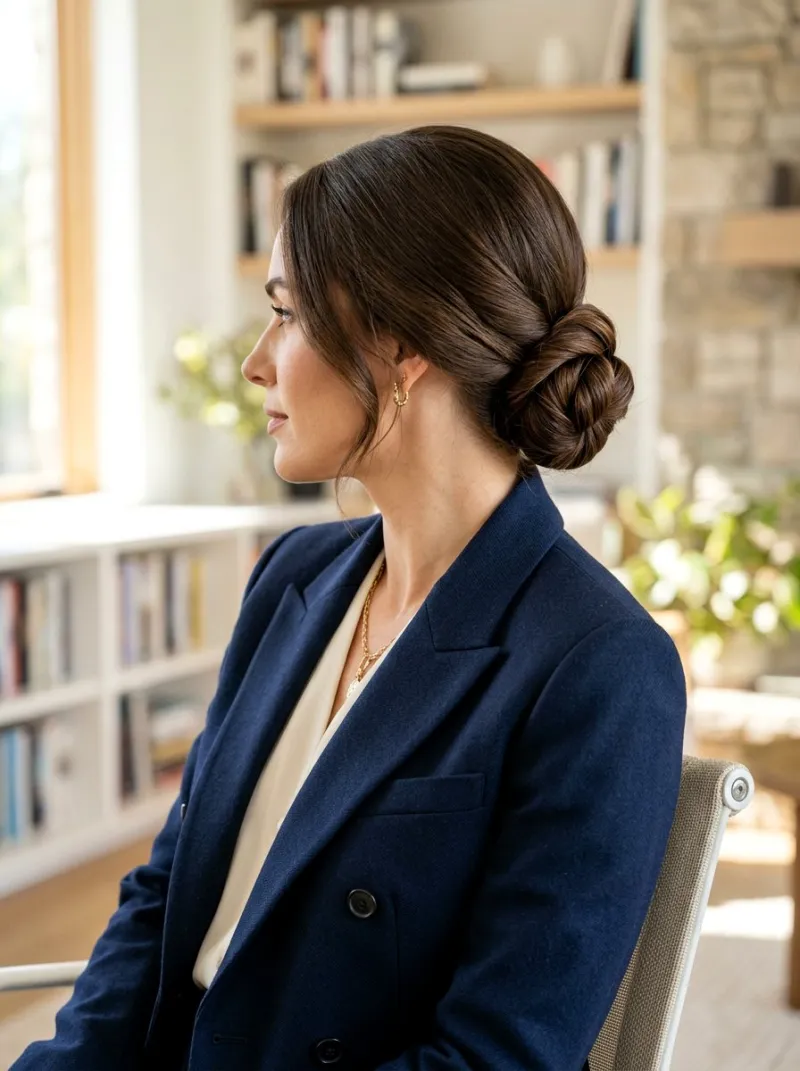
Here's where it gets interesting for students of the updo: the ballerina bun and the chignon are close relatives, and each trend cycle strengthens the family. The chignon — the low, often twisted or knotted bun worn at the nape — borrows ballet's discipline but relaxes its posture. Where the ballet bun sits high and demands perfection, the chignon sits low and tolerates, even invites, a little imperfection.
Every balletcore revival primes American women for both. The slicked high bun is the training ground; the chignon is the graduation. Once you've mastered the gel, the brush, and the pin rotation required for a dancer's bun, a low chignon is a two-minute adjustment.
Stylists have noticed the pipeline. Bridal appointments increasingly feature clients requesting "something ballet-adjacent but softer" — a slicked crown dissolving into a loose, low knot. Office culture has embraced the same hybrid, a style polished enough for a client call but human enough for after-work drinks.
The Staying Power Problem (There Isn't One)
Will the ballet bun ever fully fade? History says no. The style survives because it solves real problems — it's heat-free, it's fast, it flatters nearly every face shape, and it photographs like a dream. Add the cultural halo of dance, an art form America never stops romanticizing, and the bun has both function and fantasy working for it.
For the chignon, that's excellent news. Every woman who learns to slick and pin for a barre class is one step away from the most enduring updo in the American repertoire. The bun cycles back. It always has. And its quieter cousin, the chignon, rides in on the same music — a little lower, a little looser, and just as timeless.