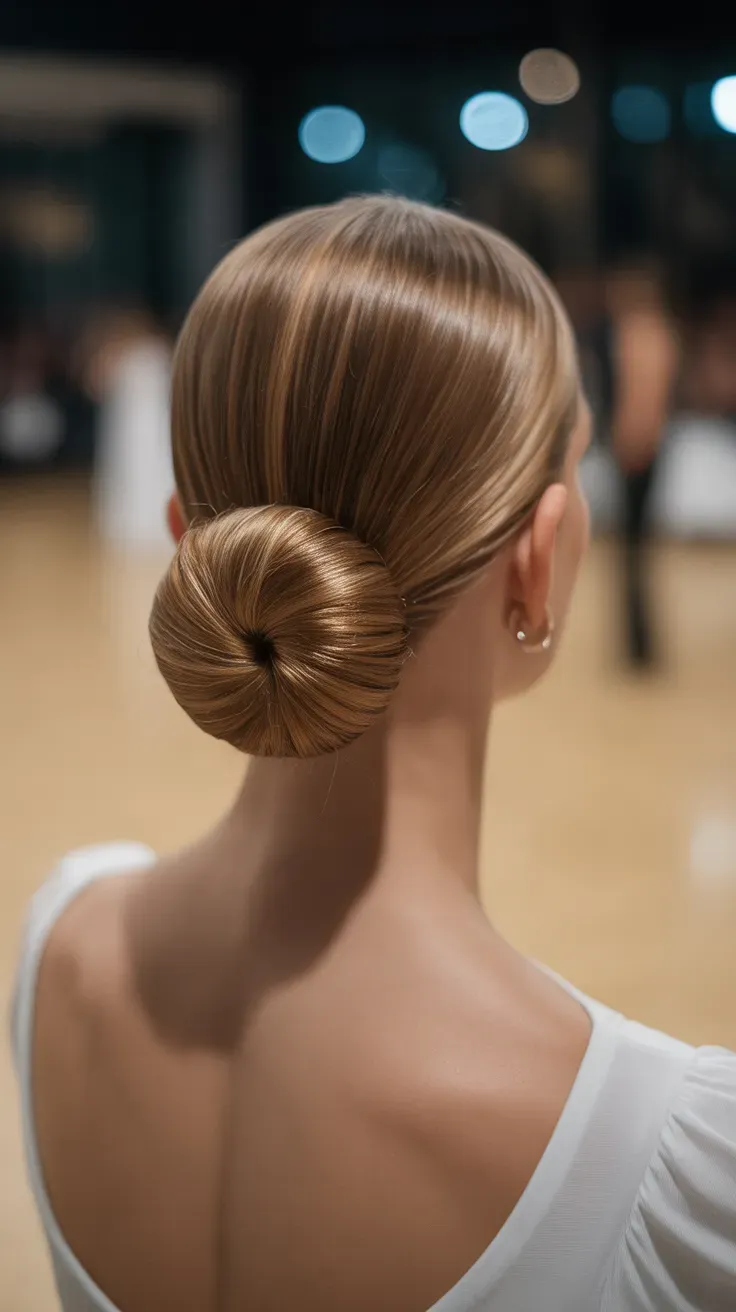
Sticky Air, Steady Pins: A Southern Stylist's Field Guide to Heatproof Updos
Photo: Rama, CC BY-SA 3.0 fr, via Wikimedia Commons
There's a moment every July when a woman in Atlanta looks in the mirror, watches her carefully smoothed bun begin to halo with frizz, and accepts defeat. We've all been there. But here's the thing the South's best stylists know: humidity doesn't have to win. You just have to stop fighting the weather and start planning for it.
We called stylists in Houston, Atlanta, New Orleans, and Washington, D.C. — women who work through summers that would wilt a lesser chignon — and asked what actually holds up. Their answers were refreshingly unglamorous.
Stop Fighting the Frizz, Start Designing Around It
"The number one mistake? Trying to do a sleek, glass-smooth updo in August," says Marisol Vega, a Houston-based stylist who works bridal season year-round. "By the time the reception starts, that style has expanded. What survives down here is texture."
Translation: the messy, loosely gathered low bun isn't just a trend — in humid climates, it's engineering. When hair swells, a style with built-in softness absorbs the change instead of resisting it. A lacquered bun, by contrast, has nowhere to go but out.
Vega's rule of thumb: the more humid the day, the more movement you build into the style. A twisted low bun with face-framing pieces left loose will still look intentional at hour six. A slicked-back knot will look like a weather event.
The Pin Patterns That Earn Their Keep
Ask any Southern stylist about humidity and they'll talk about pins before products. The consensus: bobby pins are only as strong as their architecture.
- The crosshatch. Instead of pinning straight in, stylists in New Orleans swear by crossing two pins in an X at each anchor point. The tension between them locks hair in place even when the strands themselves soften.
- The fan anchor. For heavier, thicker hair — common in the South — pins fanned outward from the base of the bun distribute weight so no single point strains.
- The hidden third pin. Atlanta stylist Renee Okafor's signature move: one pin placed vertically at the nape, invisible from the front, that catches the whole style if everything else lets go. "It's the seatbelt," she says. "Nobody sees it. Everybody needs it."
And yes, invest in quality pins. The two-dollar packs bend; the professional-grade ones grip. At under ten dollars for a set that lasts years, it's the cheapest insurance in your kit.
Product, Per the People Who Know
The stylists we surveyed had one near-unanimous pick: texturizing spray before styling, not after. Applied to damp or day-old hair, it gives pins something to grip — a genuine problem with freshly washed, slippery hair in muggy air.
Their short list:
- A grip-enhancing texturizing powder or spray at the roots (budget versions abound at the drugstore)
- A flexible-hold hairspray — not the helmet stuff, which cracks and flakes in moisture
- A light anti-humectant serum on the hairline only, to keep flyaways down without weighing the style
- Clear elastics, doubled, because humidity loosens everything, including your base
Total damage to your wallet: under $25 if you're starting from zero. Consider it the Budget Beauty math of surviving July.
The Climate Cheat Sheet
Match your zip code to your updo:
Houston / New Orleans (swamp-level humidity): Loose twisted low bun, textured with spray, crosshatch pins, hairline left soft. Forget sleekness entirely.
Atlanta / Nashville (hot with a side of volume): The claw-assisted French twist or a slightly undone knot. Build in height at the crown knowing the air will add more.
Washington, D.C. / Richmond (sticky but survivable): You can attempt a smoother chignon here — with an anti-humectant hairline and a fan-anchor pin base. The Metro commute will test it.
Coastal Carolinas (breeze plus moisture): Braided-accent buns. The braid's structure holds when a twist won't, and the texture reads beachy rather than defeated.
The Real Secret
Every stylist said some version of the same final line: do a trial run on the worst possible day. Style your hair on a muggy Saturday morning, run your errands, and see what's standing by dinner. Your bathroom mirror in January tells you nothing about your hair in July.
Humidity is coming whether you're ready or not. The chignon, it turns out, can be.